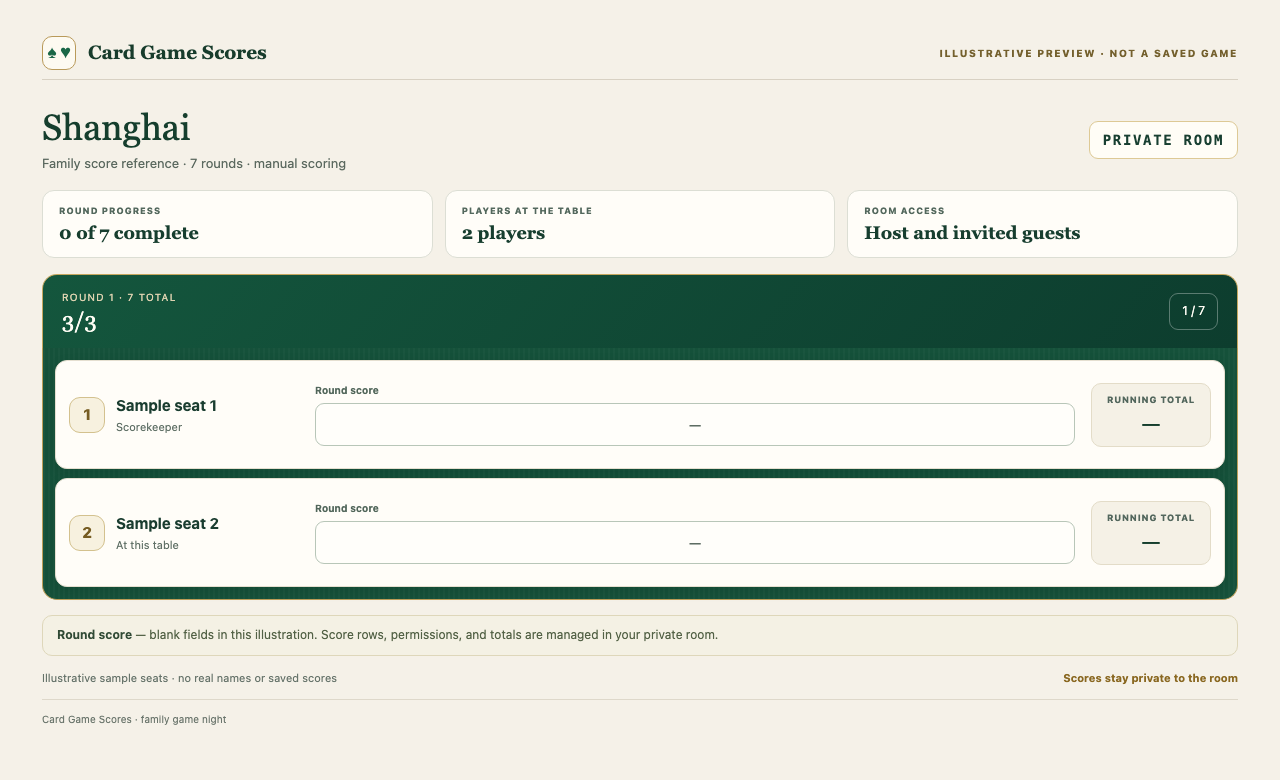
Shanghai
This Shanghai scorecard preserves seven family hand labels. Their contracts, deal and winner direction are undefined, so confirm those rules before scoring; the linked Contract Rummy game is a separate reference.
Rules and scoring →Browse 39 source-linked guides with setup, how to play, scoring examples, variant notes and matching scorecards.
This Shanghai scorecard preserves seven family hand labels. Their contracts, deal and winner direction are undefined, so confirm those rules before scoring; the linked Contract Rummy game is a separate reference.
Rules and scoring →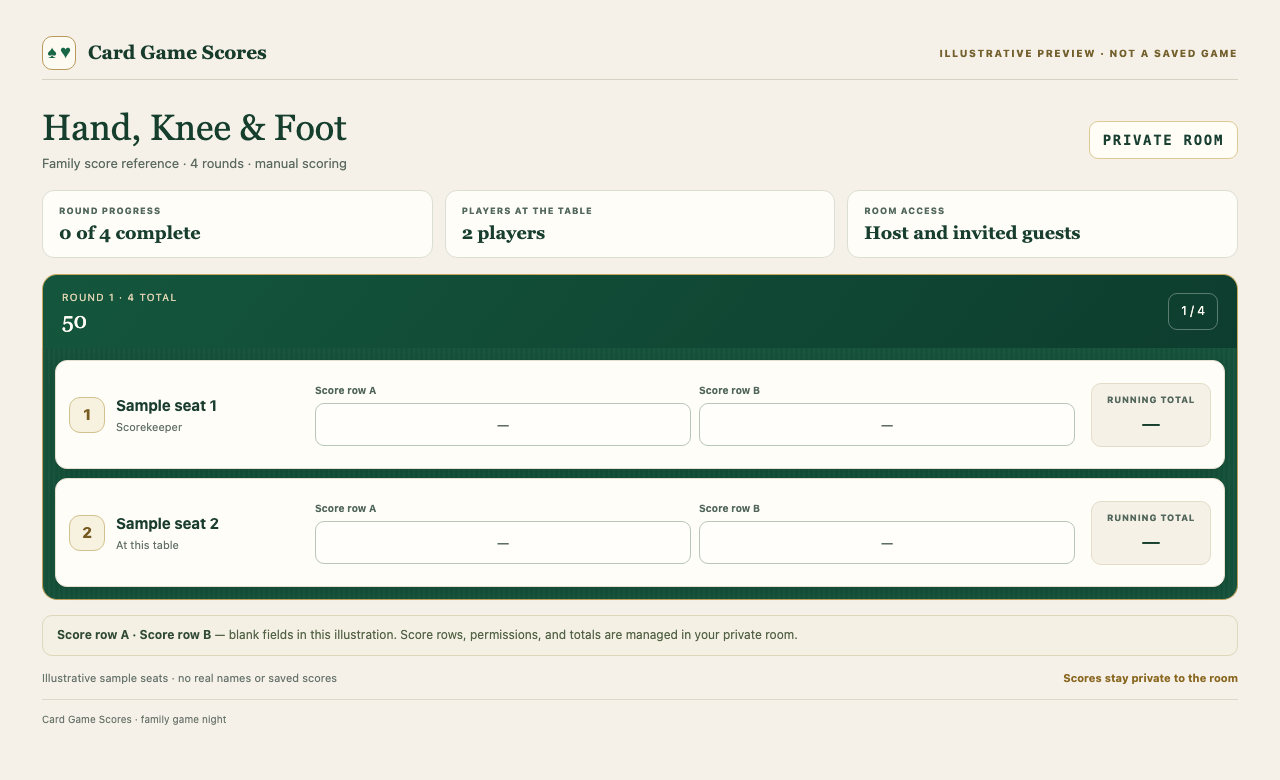
Hand, Knee & Foot here is a four-stage family ledger with two score rows per stage. The supplied notes leave the rows and several play rules undefined; ordinary Hand and Foot is a distinct reference game.
Rules and scoring →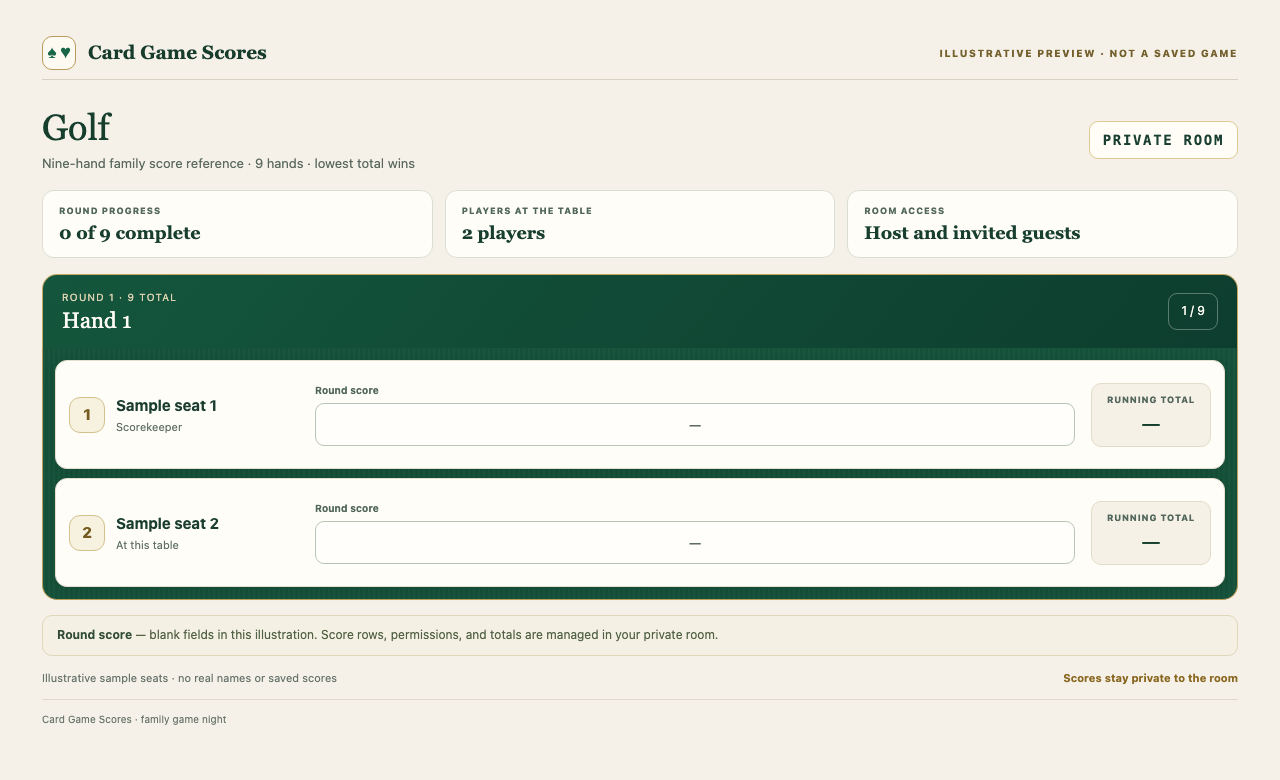
The family Golf preset means nine hands, not nine cards. Choose the layout and clarify the family card shorthand before play; the lowest total after the nine hands wins.
Rules and scoring →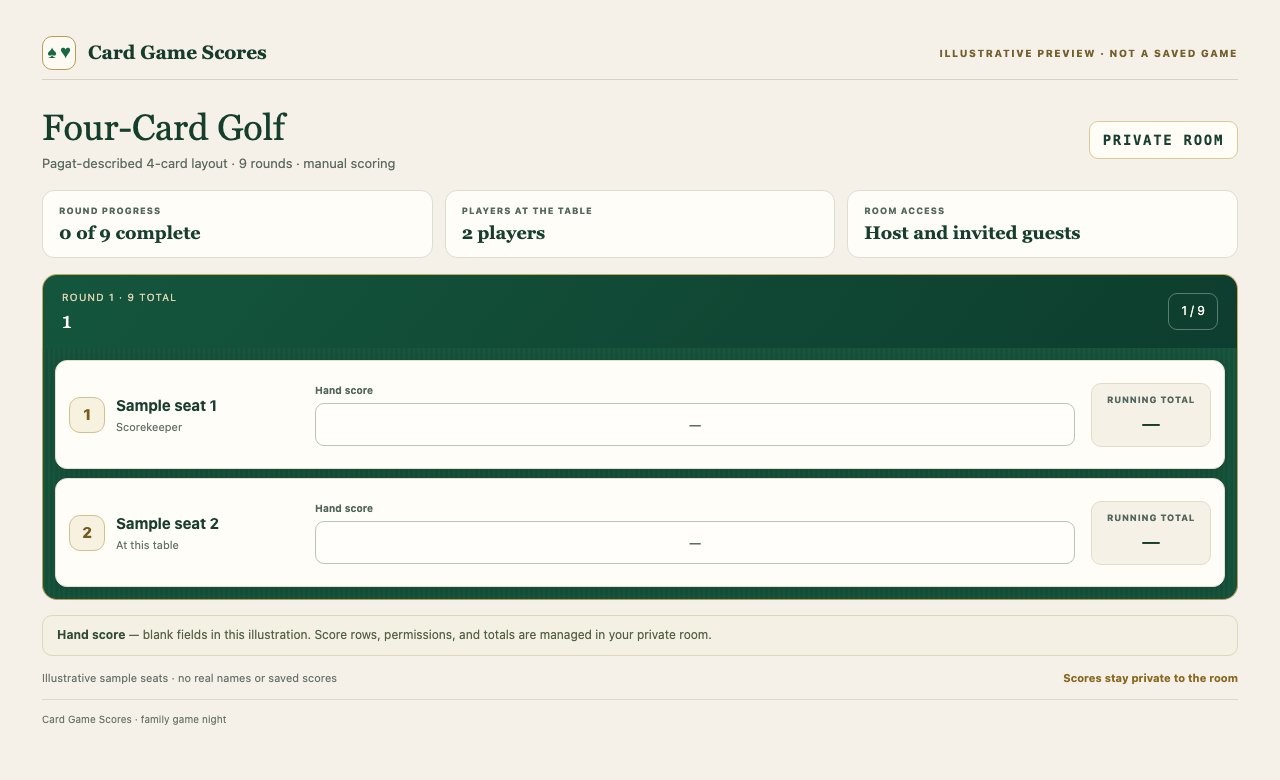
Four-Card Golf uses a 2×2 layout and a knock to end the hand. Remember hidden cards, replace expensive cards, then record the revealed layout total.
Rules and scoring →
Six-Card Golf uses a 2×3 layout with matching vertical pairs worth zero. Twos are −2 in the cited base game; record the hand after one layout becomes fully visible.
Rules and scoring →
Hearts is a trick-taking game in which hearts and the queen of spades cost points. Avoid penalties; the lowest total wins when a completed hand takes someone to 100.
Rules and scoring →
Basic Rummy rewards going out by melding sets and suited runs, laying off and discarding. The winner of a hand collects points for the cards opponents still hold.
Rules and scoring →
Gin Rummy is a two-player race to reduce deadwood in a ten-card hand. Knock with at most 10 deadwood or go gin; calculate the award before recording it.
Rules and scoring →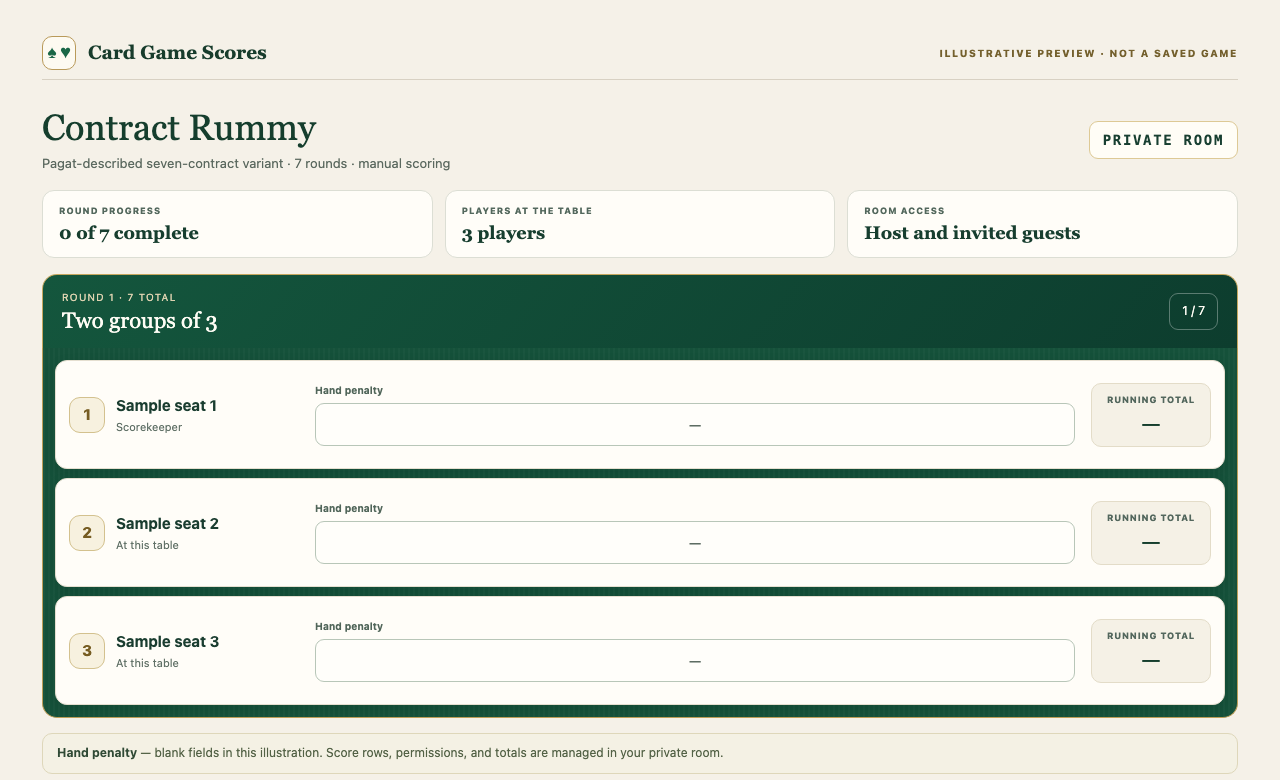
Contract Rummy requires a different opening meld on each of seven deals. Complete the current contract before laying off, and avoid leftover-card penalties.
Rules and scoring →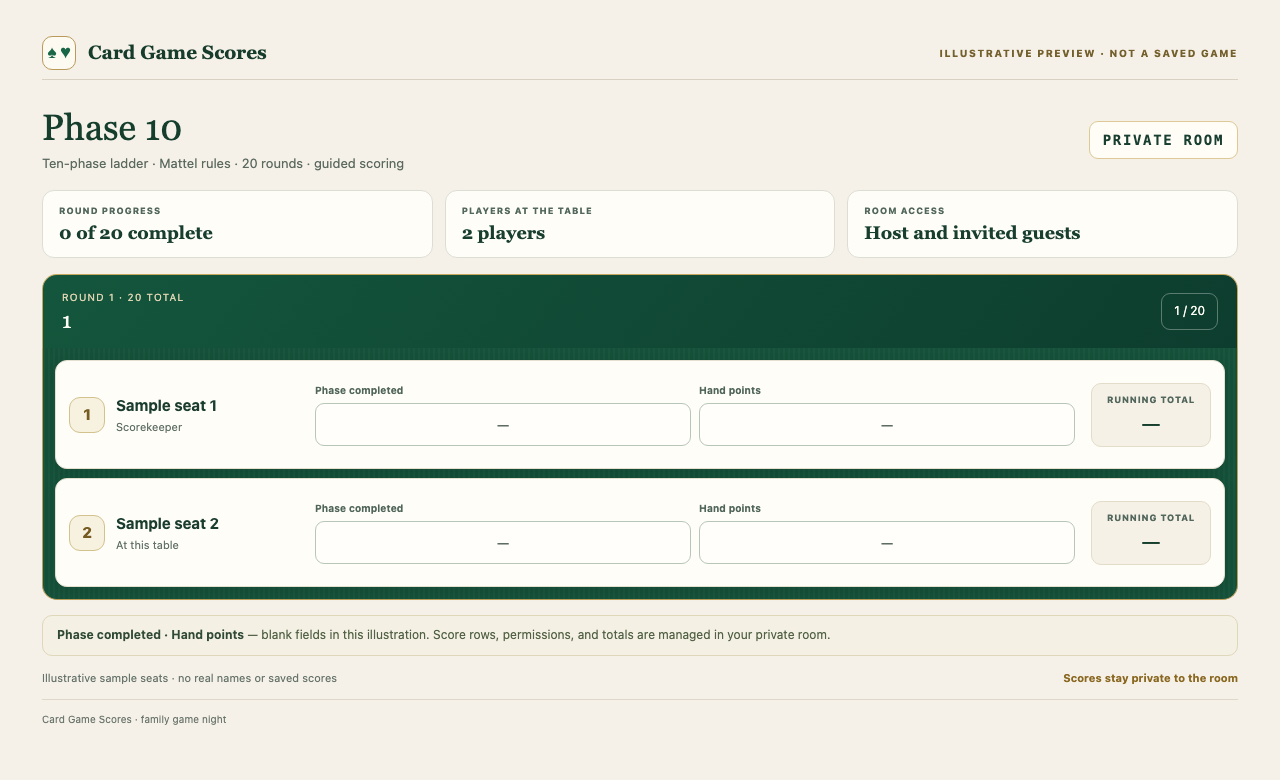
Phase 10 lets each player advance only after laying down their current phase. First to complete Phase 10 wins; card penalties decide simultaneous finishes.
Rules and scoring →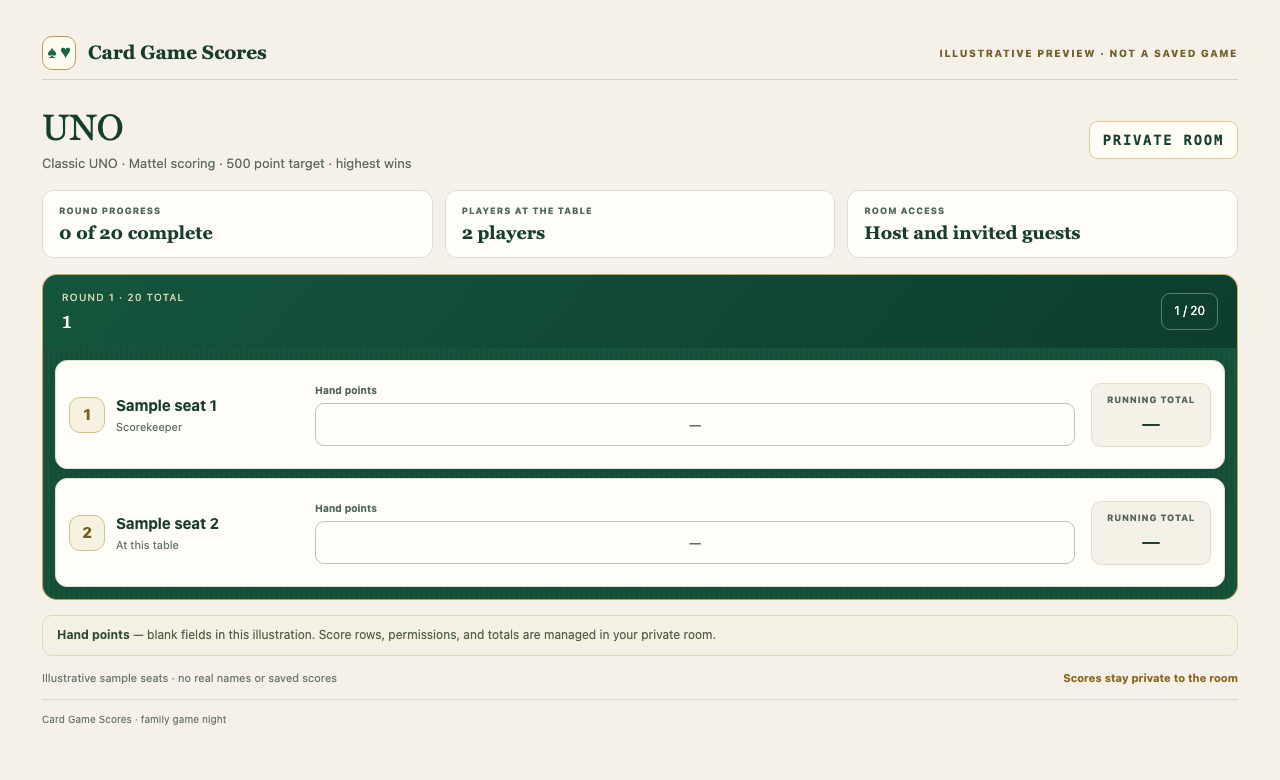
Classic UNO is a race to empty your hand by matching color, number or symbol. The round winner scores opponents’ remaining cards toward 500 points.
Rules and scoring →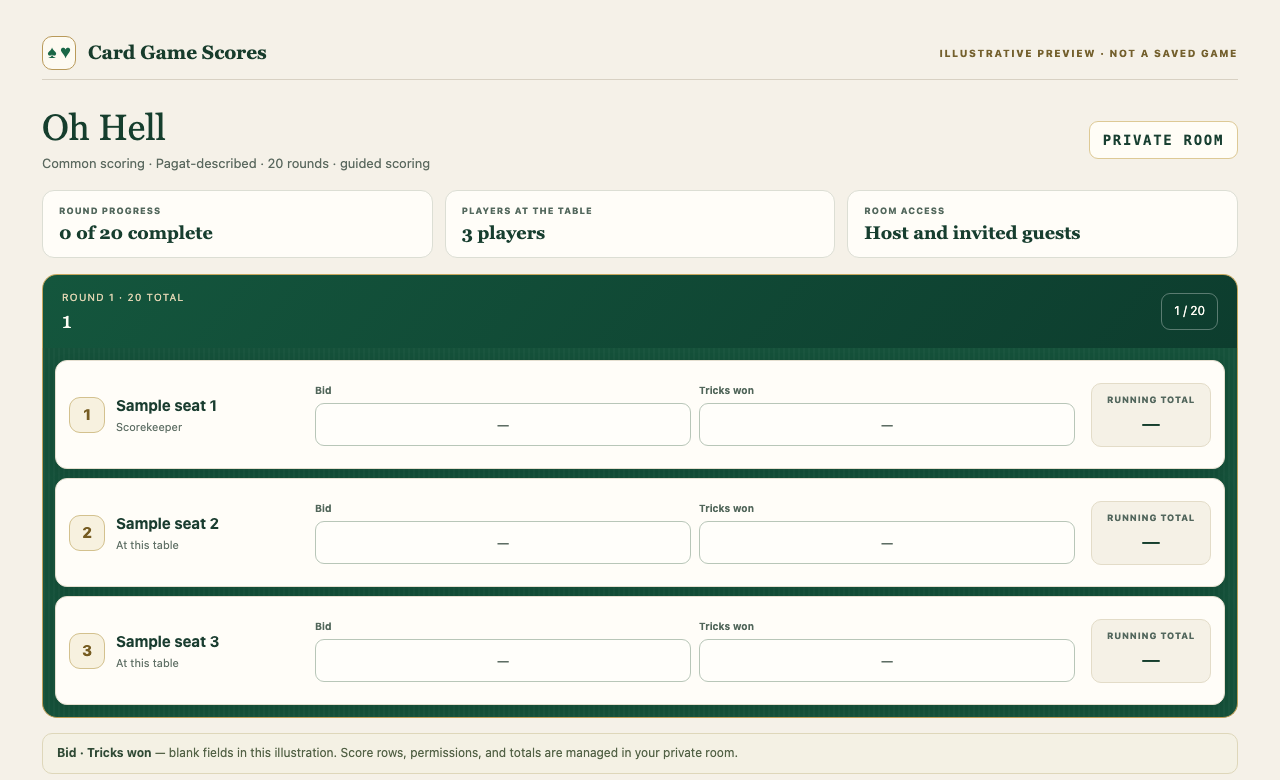
Oh Hell asks each player to predict an exact number of tricks. This preset scores one per trick plus 10 for an exact bid, using the app’s displayed deal schedule.
Rules and scoring →
Original DOS matches numbers in a center row, sometimes using two cards whose sum matches. Color bonuses help shed cards; the first to 200 points wins.
Rules and scoring →
Rummy 500 scores each player’s melds minus cards left in hand. Taking a buried discard requires taking all cards above it and immediately using the buried card.
Rules and scoring →
Five Crowns is an eleven-round rummy game with hand sizes and wild ranks rising from three to thirteen. Minimize unmatched-card penalties across all rounds.
Rules and scoring →
Wizard adds four Wizards and four Jesters to exact-bid trick taking. Correct bids earn 20 plus 10 per trick; missing by any amount loses 10 per trick of error.
Rules and scoring →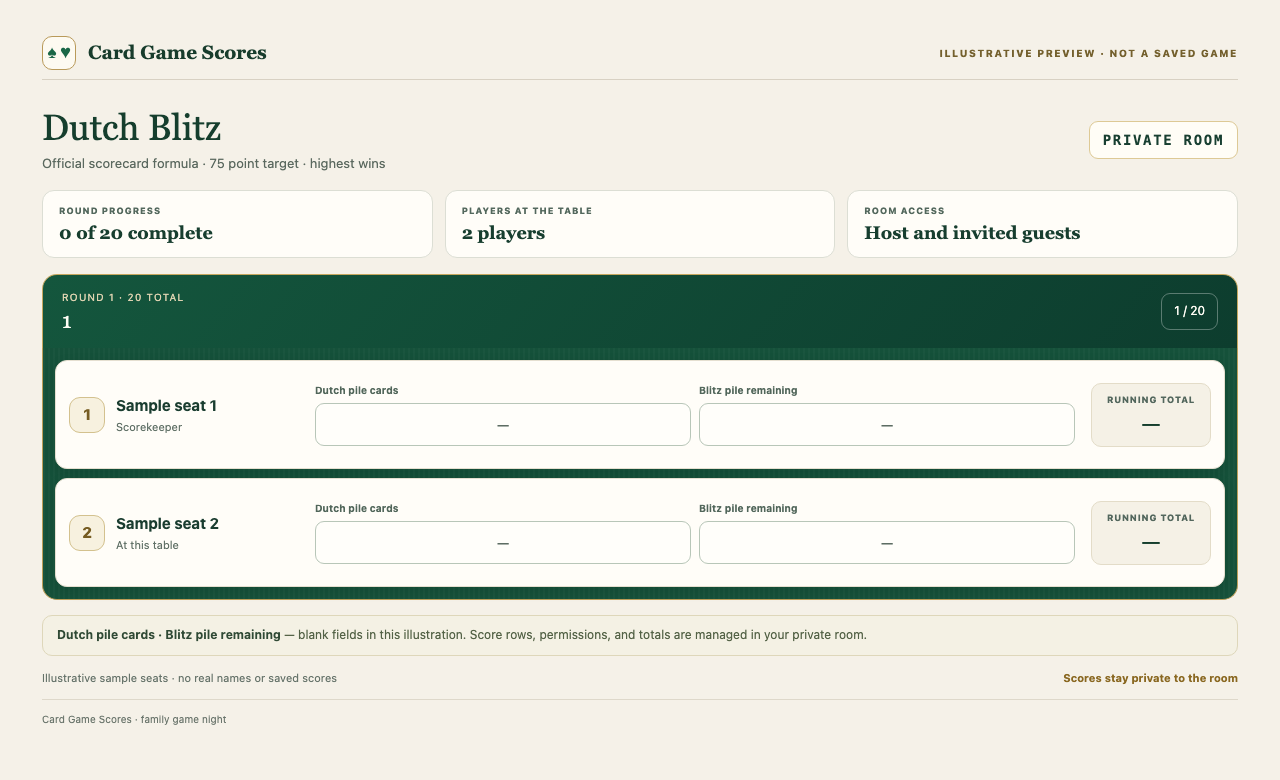
Dutch Blitz is simultaneous speed play to empty the Blitz pile. This scorekeeper uses cards played to the Dutch piles minus twice the Blitz cards left.
Rules and scoring →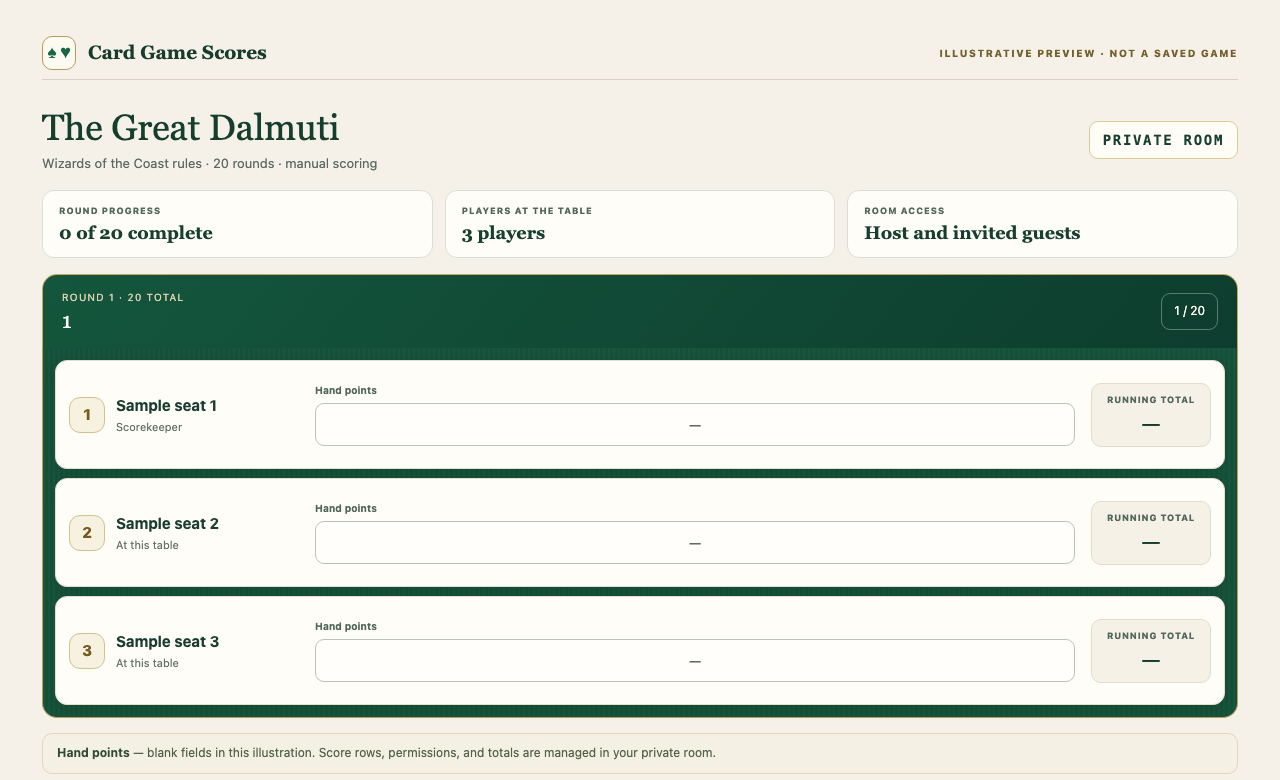
The Great Dalmuti is a shedding game: beat equal-size sets with lower ranks, or pass. Finish order changes seats and privileges; this scorecard records optional placement points.
Rules and scoring →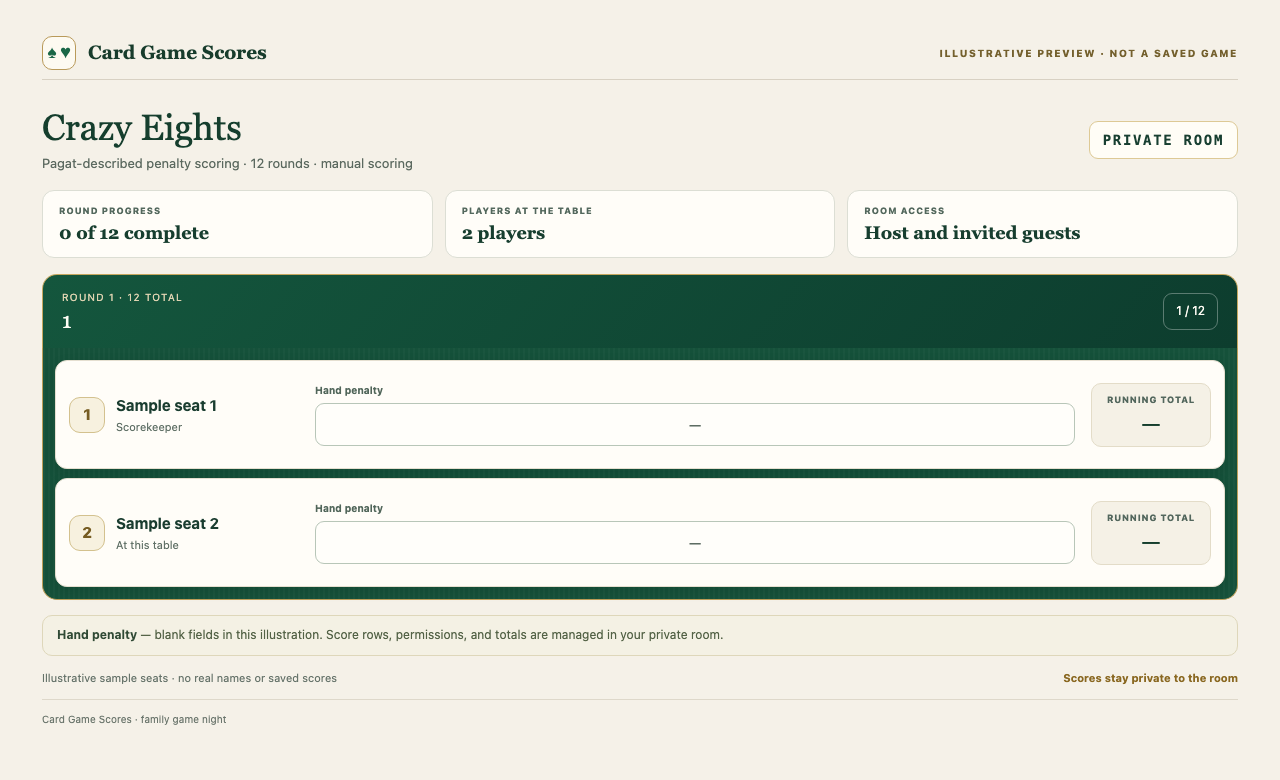
Crazy Eights sheds cards by matching rank or suit; an eight chooses the next suit. This preset counts leftover-card penalties over twelve table-selected hand slots.
Rules and scoring →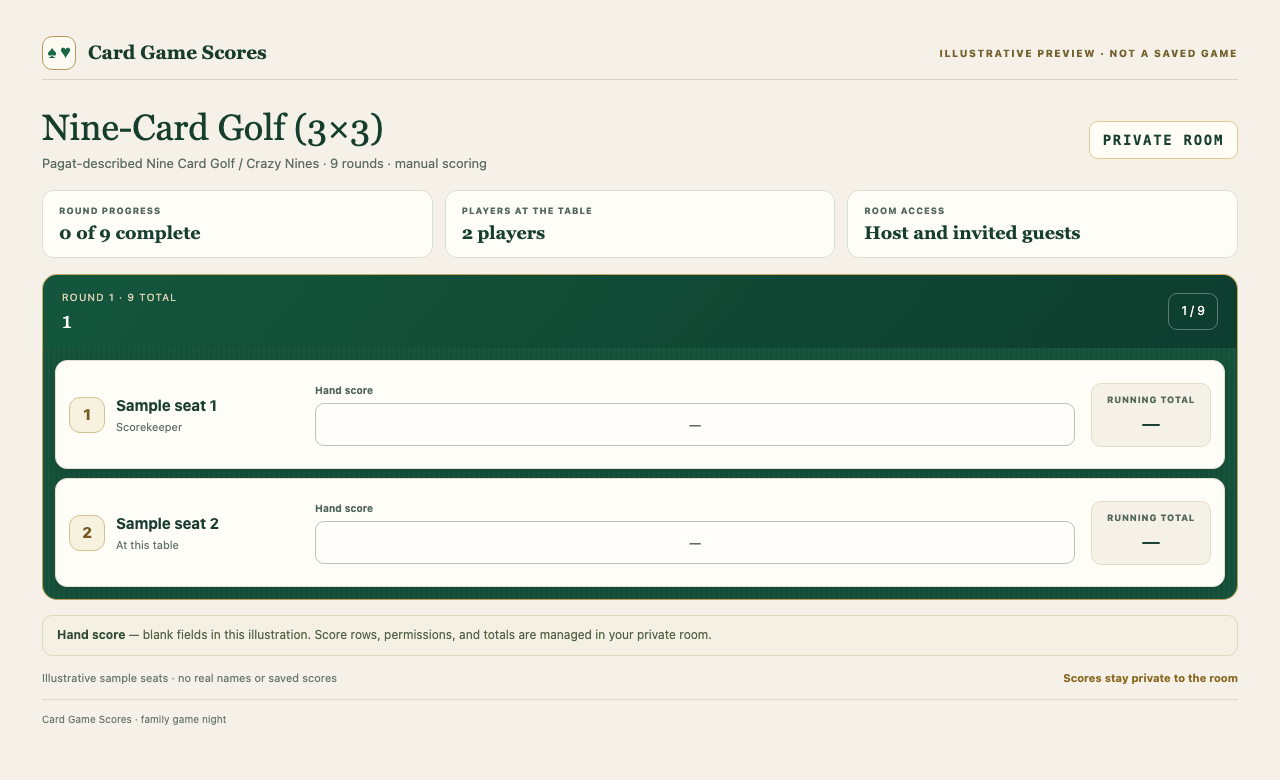
Nine-Card Golf is a 3×3 layout game, separate from nine-hand family Golf. Use the chosen triple-match rules and record the final layout penalty.
Rules and scoring →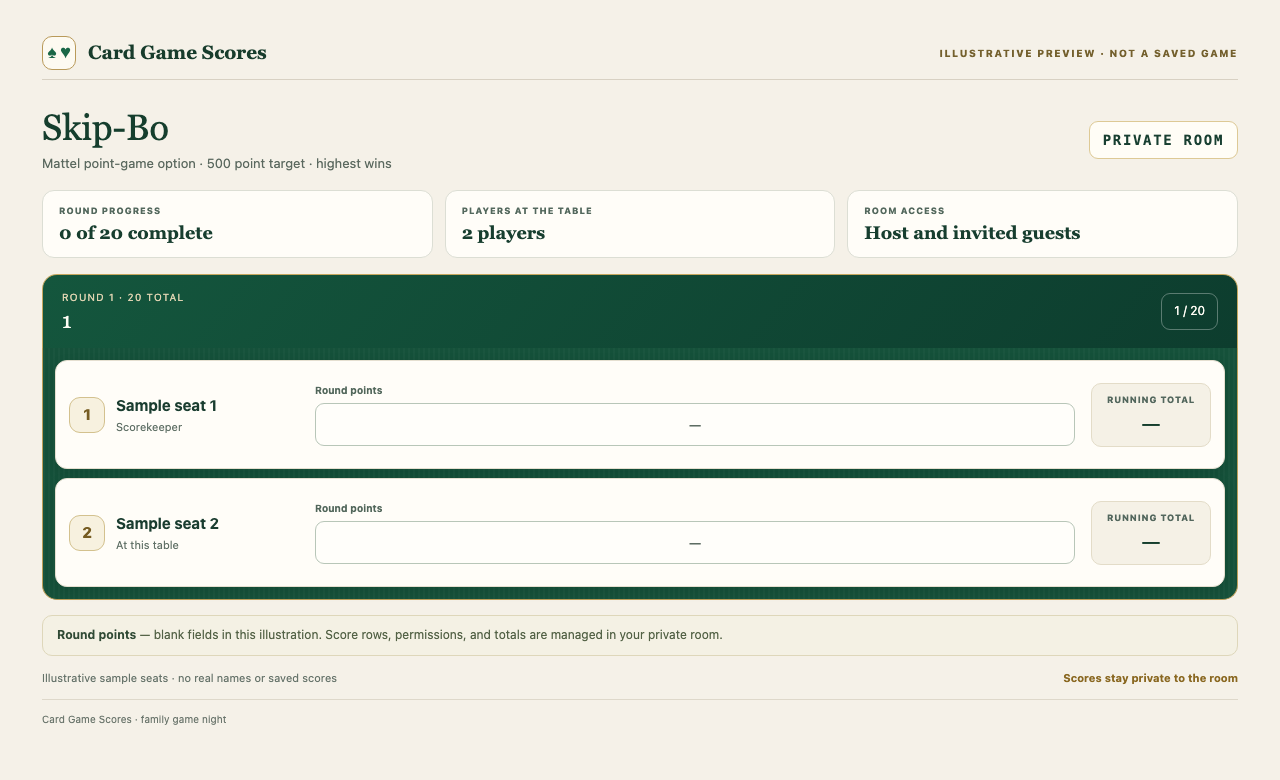
Skip-Bo builds shared piles from 1 to 12 while you race to empty your stock. This preset uses the optional cumulative point game to 500.
Rules and scoring →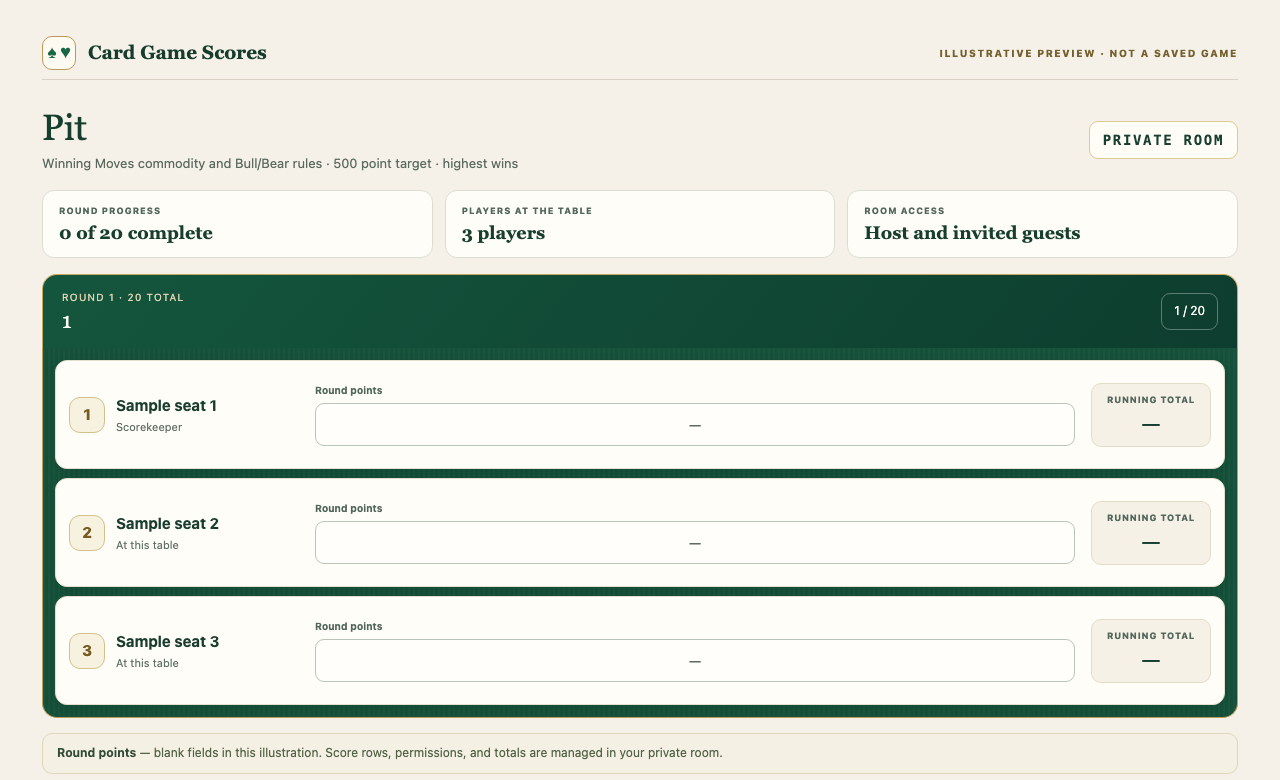
Pit is simultaneous trading to collect nine of one commodity. A corner scores that commodity’s printed value, with optional Bull and Bear rules.
Rules and scoring →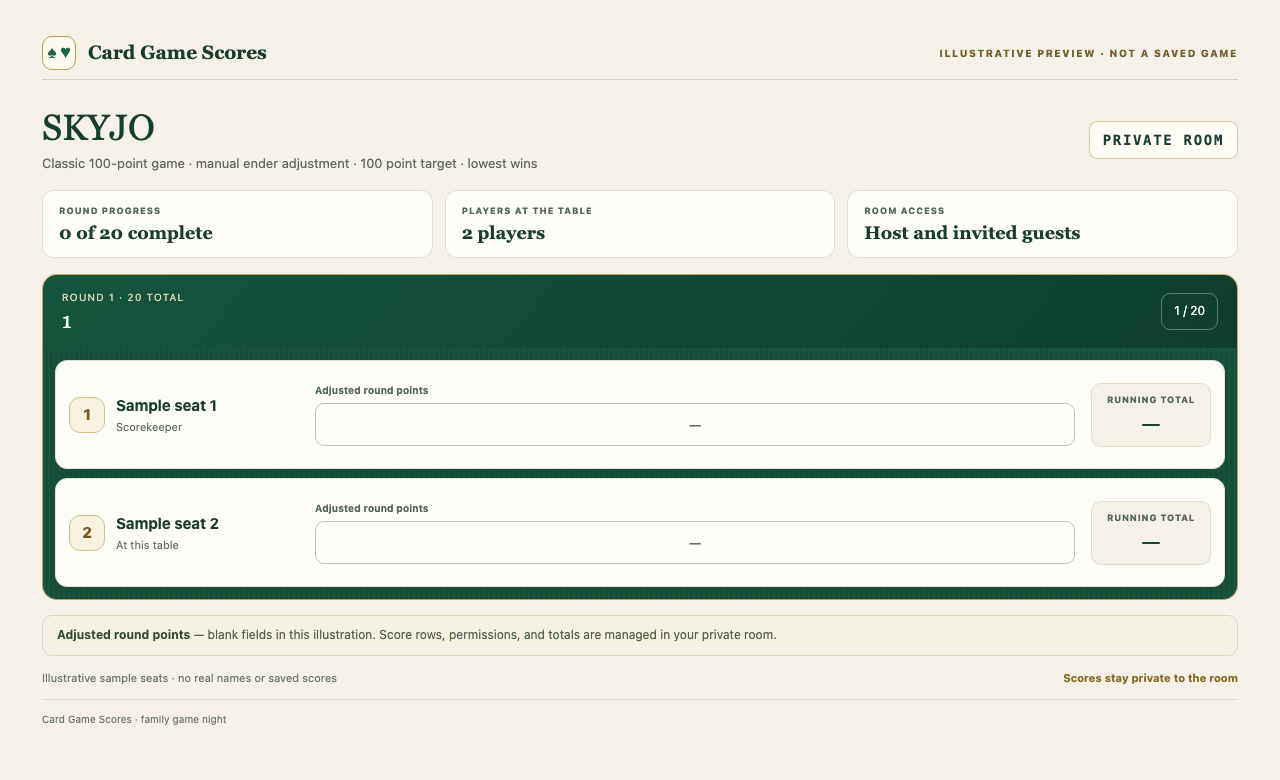
SKYJO reduces a twelve-card layout by drawing, replacing and removing equal columns. Record adjusted penalties, including the round ender’s positive-score doubling when not uniquely lowest.
Rules and scoring →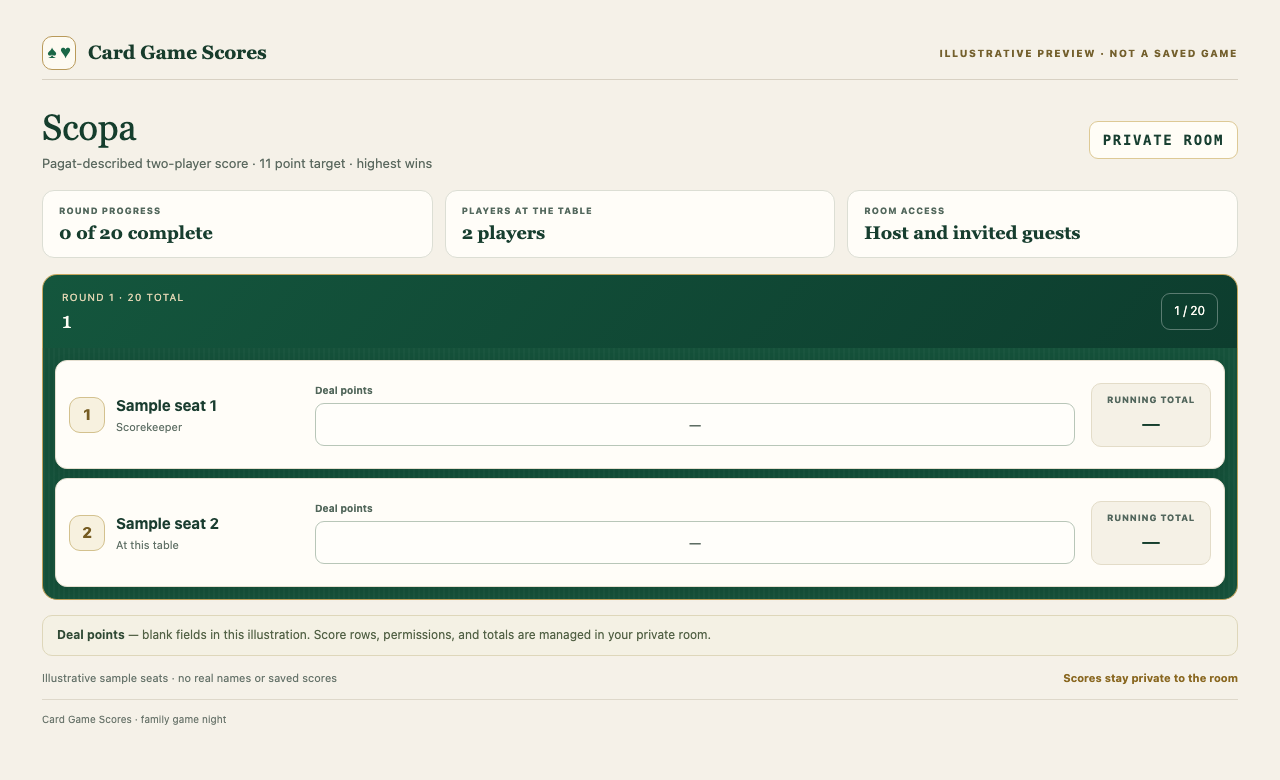
Two-player Scopa captures table cards by matching a card’s value or a sum. Score majorities, the seven of coins, primiera and sweeps after each complete deal.
Rules and scoring →
Cassino captures equal cards, sums and declared builds. This two-player preset totals capture points after a full deal toward 21.
Rules and scoring →
Whist to 7 is a four-player partnership trick-taking game. Each team earns one point per trick above six; this named scorecard ends at seven points.
Rules and scoring →
Partnership Euchre chooses trump and plays five tricks. Makers need at least three; defenders score for euchring them. This scorecard uses two team rows to ten.
Rules and scoring →
Classic Partnership Canasta builds rank melds and seven-card canastas. Score melds and bonuses minus cards left, using two team rows toward 5,000.
Rules and scoring →
Sixty-Six has two kinds of points: card points inside a deal and game points for winning it. Enter only the 1–3 game-point award into this scorecard.
Rules and scoring →
Nerts is simultaneous solitaire with shared center foundations. Earn one point per center card and lose two per card remaining in your Nerts pile.
Rules and scoring →
6 nimmt! reveals chosen cards together and places them in ascending order into four rows. Taking a row costs its bullheads; lowest total wins when someone reaches 66.
Rules and scoring →
L.L.A.M.A. sheds matching or next-value cards, with a choice to draw or quit. Only someone who empties their own hand may return one existing penalty marker.
Rules and scoring →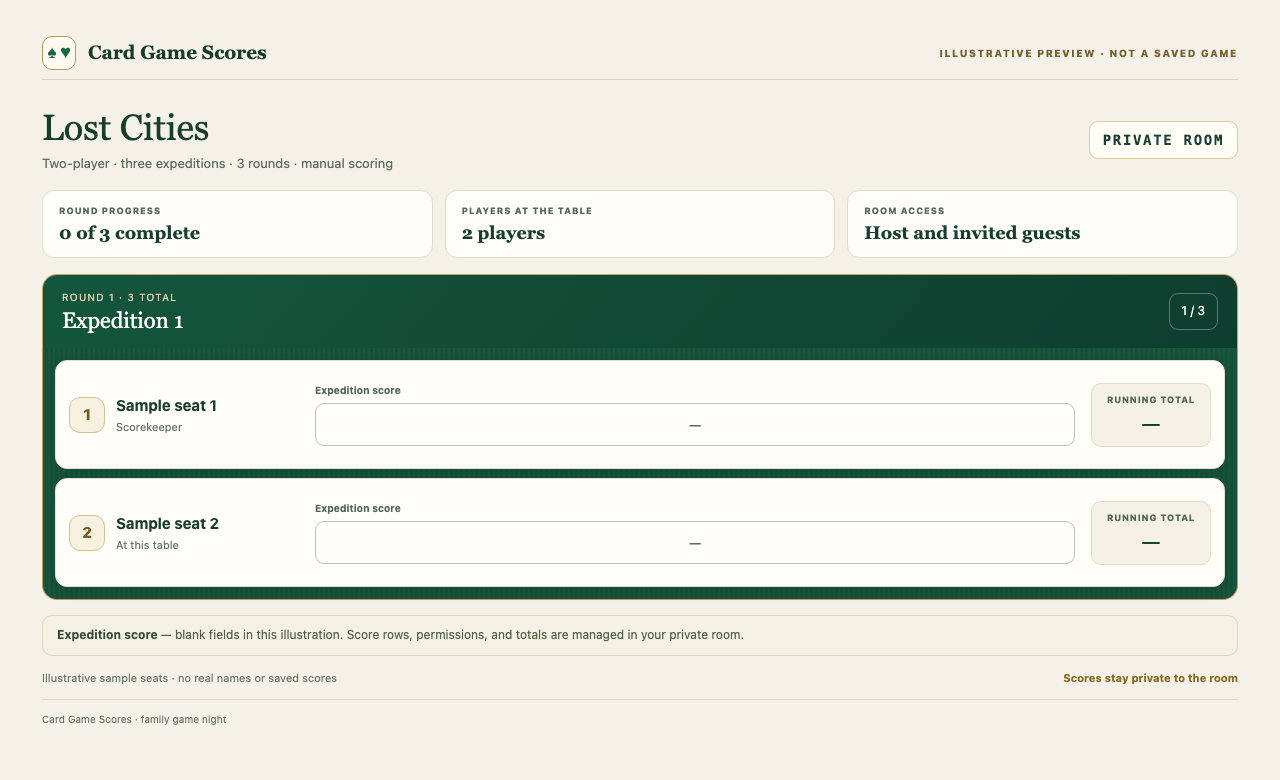
Lost Cities has two players building rising expedition columns. Play before drawing; score every started color after the draw pile empties, and add three deal totals.
Rules and scoring →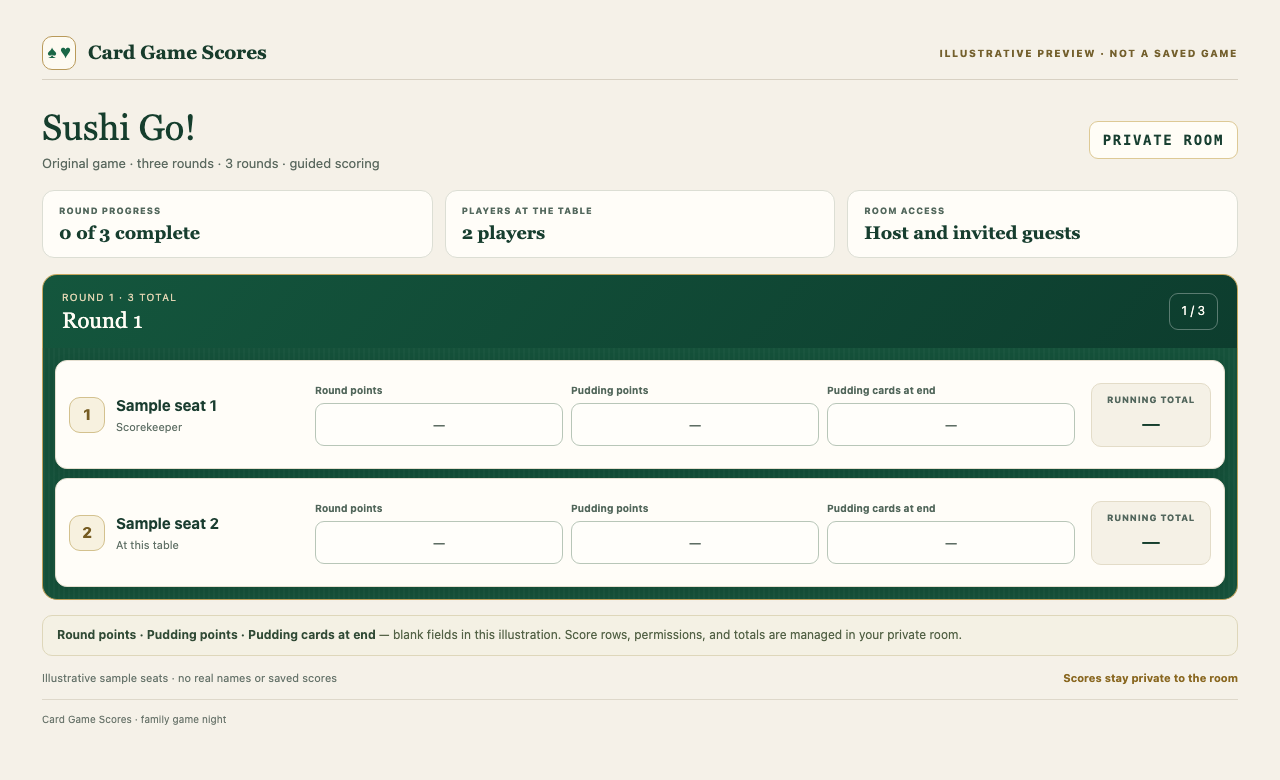
Sushi Go! drafts one card at a time from passing hands over three rounds. Score sushi each round and save puddings for the final dessert comparison.
Rules and scoring →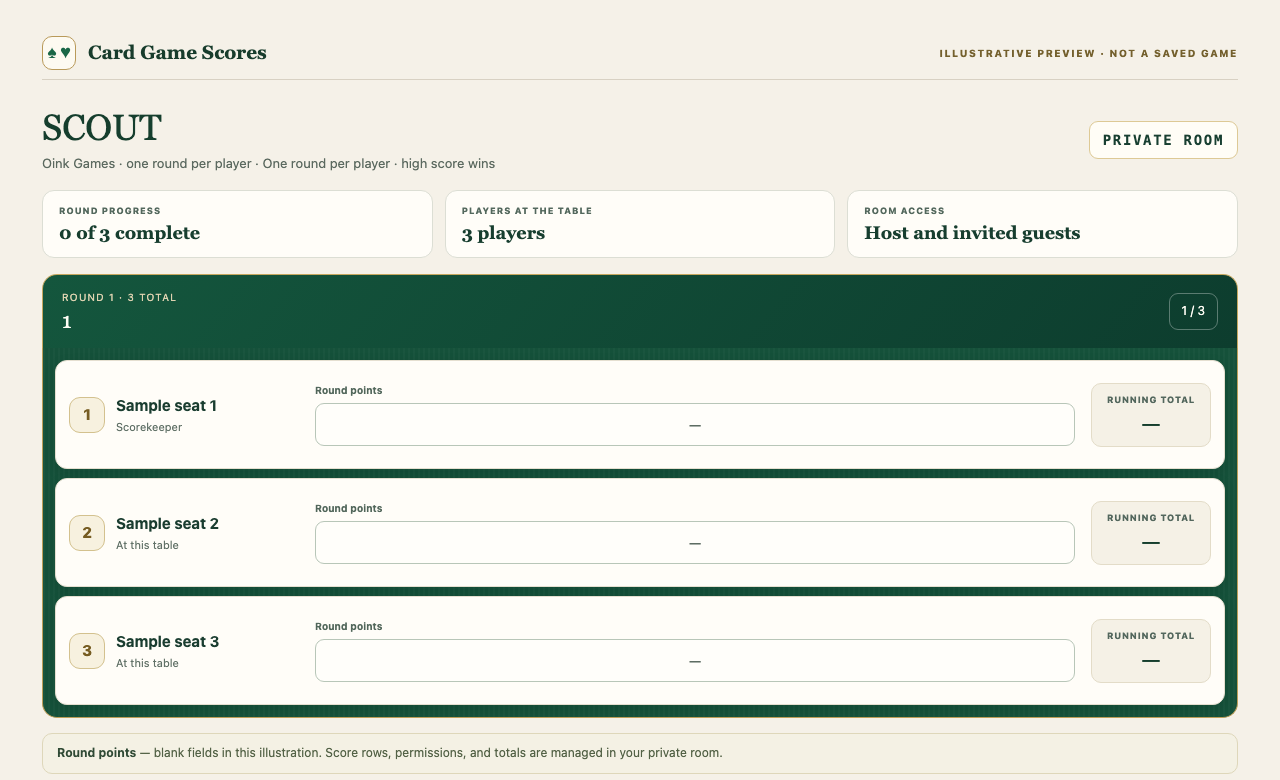
SCOUT keeps your hand order fixed while you show adjacent sets or recruit from a rival’s set. Count captured cards and scout chips, then subtract cards left.
Rules and scoring →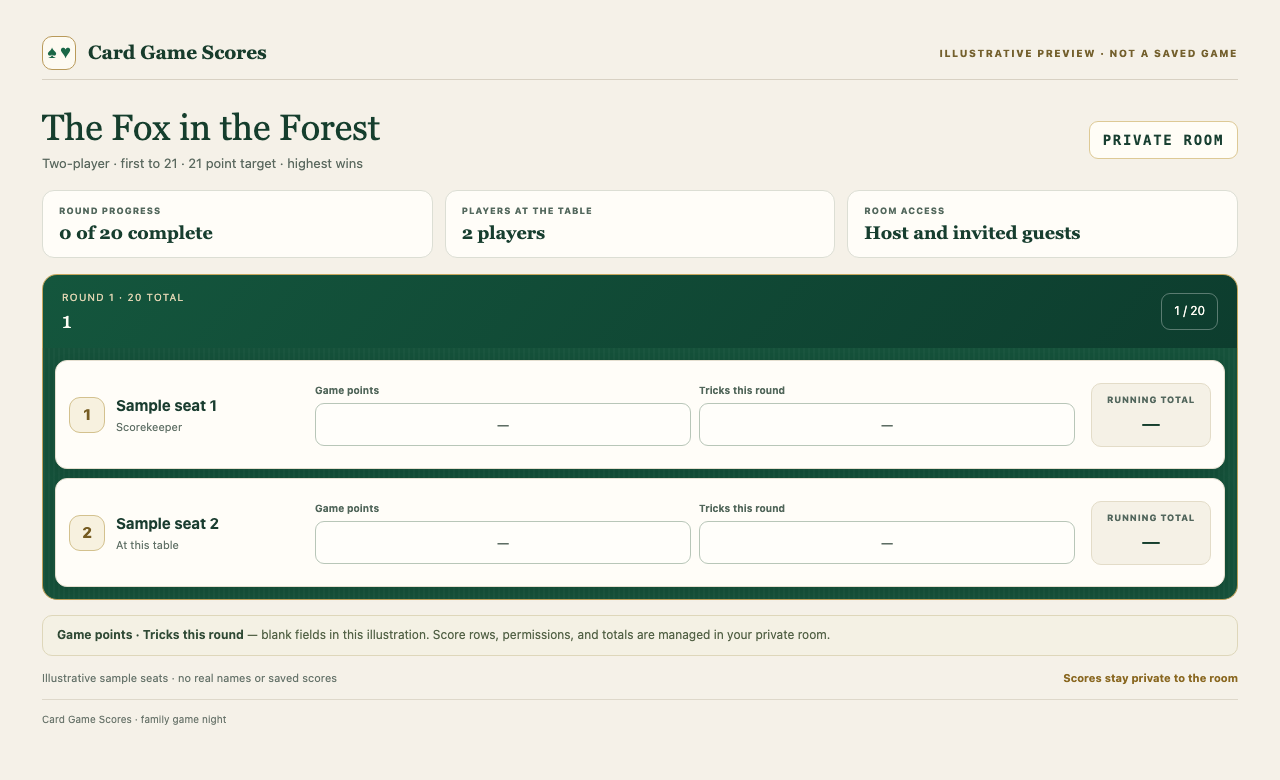
The Fox in the Forest is two-player trick taking that rewards either a few tricks or seven to nine. Count round points manually; beware this app’s tiebreak difference from its linked Deluxe rules.
Rules and scoring →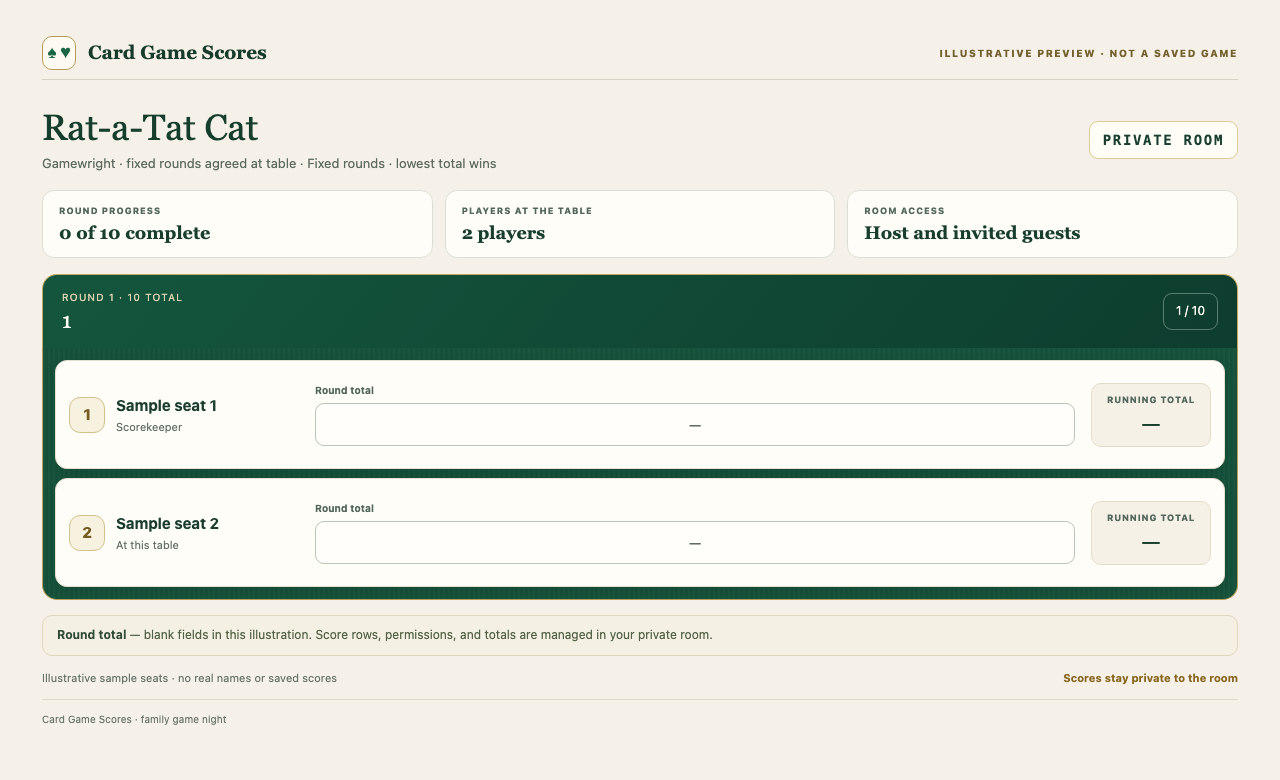
Rat-a-Tat Cat replaces remembered face-down cards to make a low four-card total. Call the round when ready; this preset selects fixed rounds rather than elimination at 100.
Rules and scoring →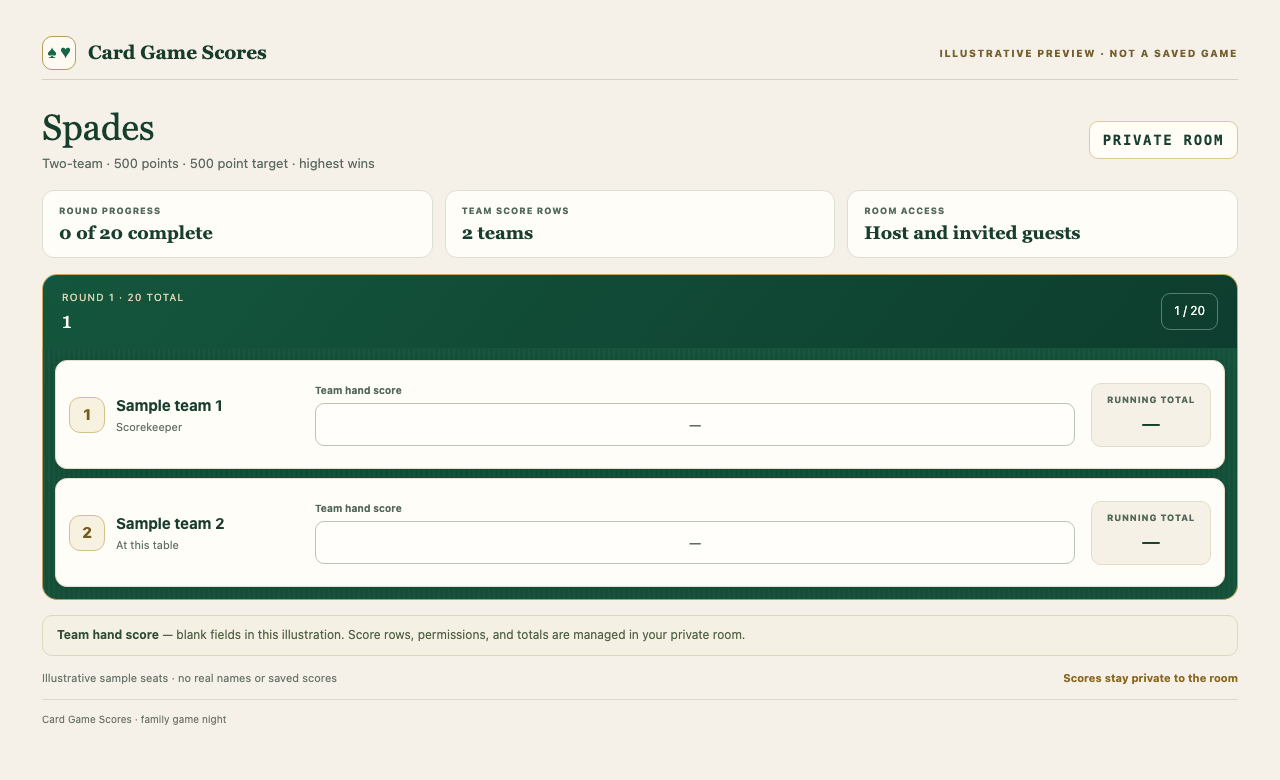
Partnership Spades bids a team trick contract with spades always trump. Record the final team points after bags and nil; this preset uses two rows to 500.
Rules and scoring →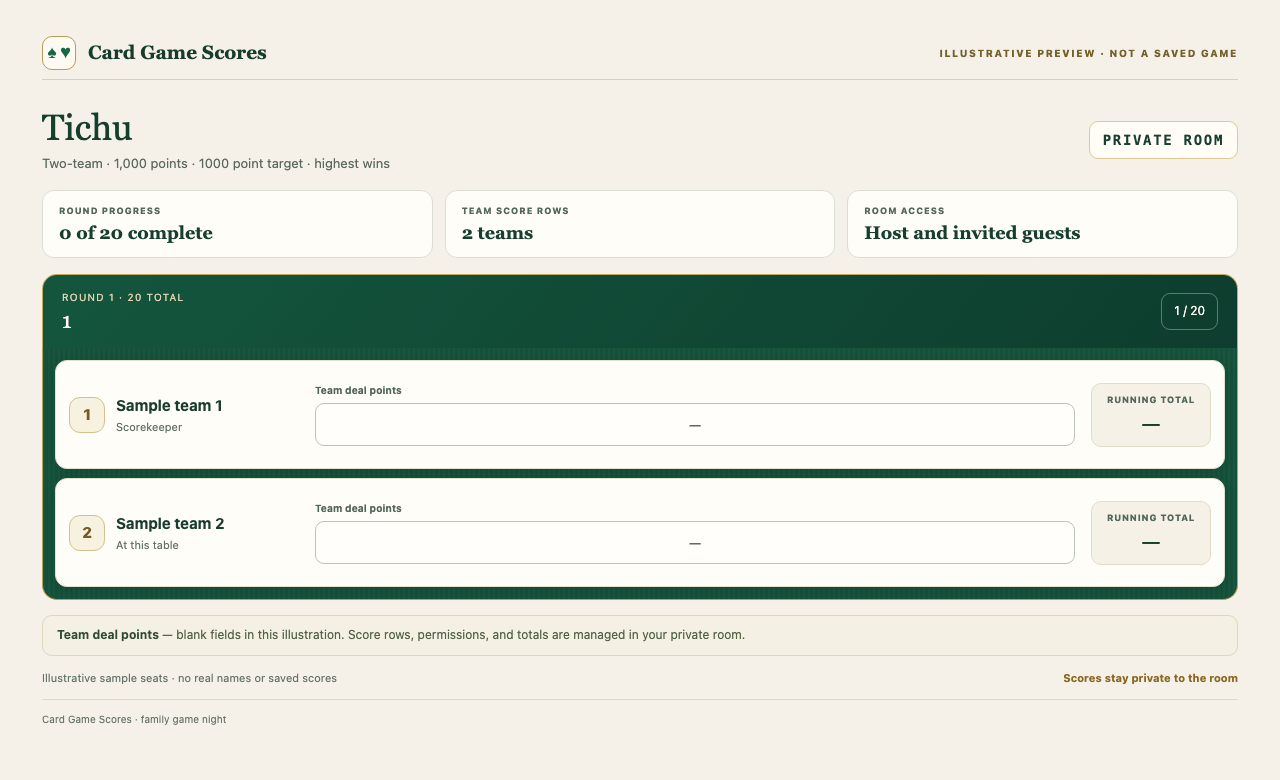
Tichu is a four-player partnership shedding game with card points, risky Tichu calls and double victories. Score the deal at the table and enter two team totals.
Rules and scoring →Yes. Hosts use an email sign-in link, review the setup and choose Start scorecard. Guests can join without email.
Open Invite players and copy the private room link, share it through the device’s available message or email sheet, or let guests scan the QR code. The app does not send invitations automatically.
Guests join as viewers. The host can grant or remove score-edit access.
Sign in with the same host email. Your account can open its saved scorecards on another device. Keep the private invitation link or room code for guests.
Play again lets the signed-in owner review saved players and settings, then create a fresh scorecard. Scores and history start fresh, with a new private room to invite the table to.
Most presets add hand scores you calculate. Oh Hell and Wizard calculate from bids and tricks; Dutch Blitz calculates from two card counts. Phase 10 tracks completion marks separately from manually entered points.
Public guides contain rules and examples. Private scorecard data, room codes and player names are excluded from the guides and sitemap.
These guides describe public rules and score-entry workflows. Private game rooms and player records are never published here.