Spades
Partnership Spades bids a team trick contract with spades always trump. Record the final team points after bags and nil; this preset uses two rows to 500.
Named rules reference · Highest total wins
Start scoring Spades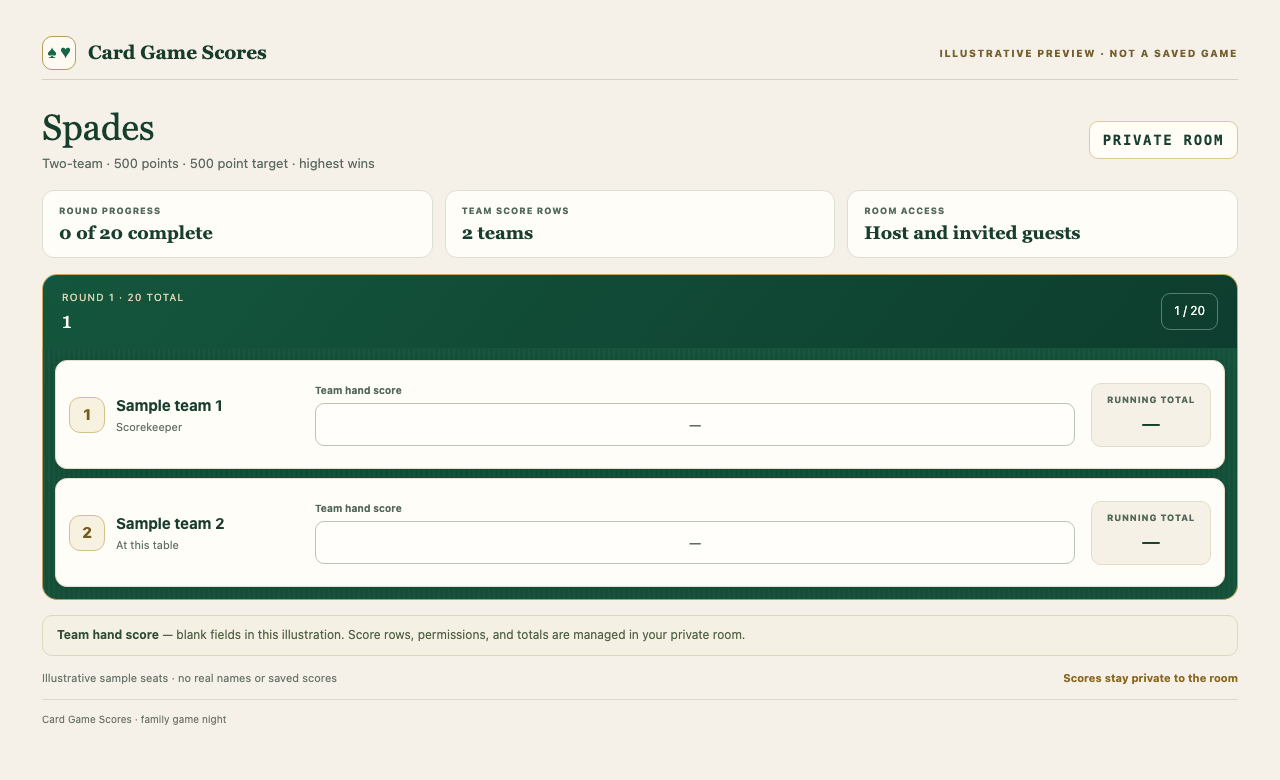
How to play Spades
Setup
- Four players sit in opposite partnerships; deal 13 each from one 52-card deck.
- Players bid expected tricks. Agree on nil, bag penalties, blind bids and tied-target endings before play.
Play a hand
- Follow suit if possible; otherwise play any card. Highest spade, or highest led-suit card without spades, wins and leads next.
- In the common version, do not lead spades until broken unless only spades remain. Play all 13 tricks.
How scoring works
- Making a contract earns 10 × team bid plus 1 per overtrick; failing loses 10 × bid.
- The common bag rule deducts 100 at ten accumulated bags; nil commonly adds/subtracts 100. Apply your selected rules and enter signed team points, not raw tricks.
Game end: This app checks a 500-point finish after a completed hand; tied-target and negative-loss rules differ by table.
What this scorekeeper records
Enter signed final team points after applying bags and nil. Bids, tricks and bonuses are not calculated.
Scoring example
A team bids 5 and takes 6: 50 contract points + 1 bag point = 51. If that hand reaches the agreed ten-bag threshold, deduct 100 and enter −49.
Frequently asked questions
Do bags cost ten points?
The cited common rule costs 100 when ten bags accumulate; do not confuse bag count with penalty value.
Does the app remember accumulated bags?
No. Track bags at the table and include a due deduction in the hand result.
Should four people have four rows?
Use two team rows for this partnership preset.
Sources and variant notes
- Pagat — Spades
Named rules reference
Rules summary reviewed 2026-10-06. Use the named edition and agree on house rules before play.
Public guide only. Score rooms, room codes, and player names are private and are not included on game pages or in the sitemap.